Education Center
How to Choose a Diamond
Choosing the perfect diamond is an exciting decision, and understanding your options can help you find a stone that matches your style, preferences, and budget. At US Jewelry Factory®, we offer a wide selection of natural and lab-grown diamonds, with different certification and clarity options.
1. Choose Between Natural and Lab-Grown Diamonds
Natural Diamonds
Natural diamonds are formed deep within the earth over millions or even billions of years. Each diamond is unique and has its own natural characteristics.
Lab-Grown Diamonds
Lab-grown diamonds have the same chemical, physical, and optical properties as natural diamonds. They are created using advanced technology in a controlled laboratory environment and are available in a wide range of sizes, shapes, colors, and clarities.
Both natural and lab-grown diamonds can be beautiful choices—the right option depends on your personal preferences and budget.
2. Choose the Right Diamond Certification
We offer diamonds with several certification options:
GIA-Certified Diamonds
GIA-certified diamonds are graded by the Gemological Institute of America (GIA), one of the world's most respected independent gemological laboratories. A GIA report provides an independent evaluation of the diamond's characteristics, including carat weight, color, clarity, and cut.
Non-Certified Diamonds
Non-certified diamonds do not come with an independent laboratory grading report. They can be an excellent option for customers looking for attractive diamonds at a more affordable price.
Clarity-Enhanced Diamonds
Clarity-enhanced diamonds have undergone a treatment designed to improve the appearance of certain internal inclusions. These diamonds can offer an attractive appearance at a lower price than comparable untreated diamonds. Clarity enhancement is a permanent treatment, but it requires special care during jewelry repair or manufacturing.
3. Consider the 4Cs
When selecting a diamond, pay attention to the four primary characteristics known as the 4Cs:
- Cut – Determines how well the diamond reflects light and contributes to its brilliance.
- Color – Refers to how much color is visible in a diamond. For white diamonds, higher grades generally appear more colorless.
- Clarity – Measures the presence of internal inclusions and external blemishes.
- Carat Weight – Refers to the diamond's weight and is one factor that affects its size and price.
The most important consideration is finding the right balance among the 4Cs based on your priorities and budget.
4. Choose Your Diamond Shape
Your preferred shape is an important part of choosing a diamond. Popular options include:
- Round
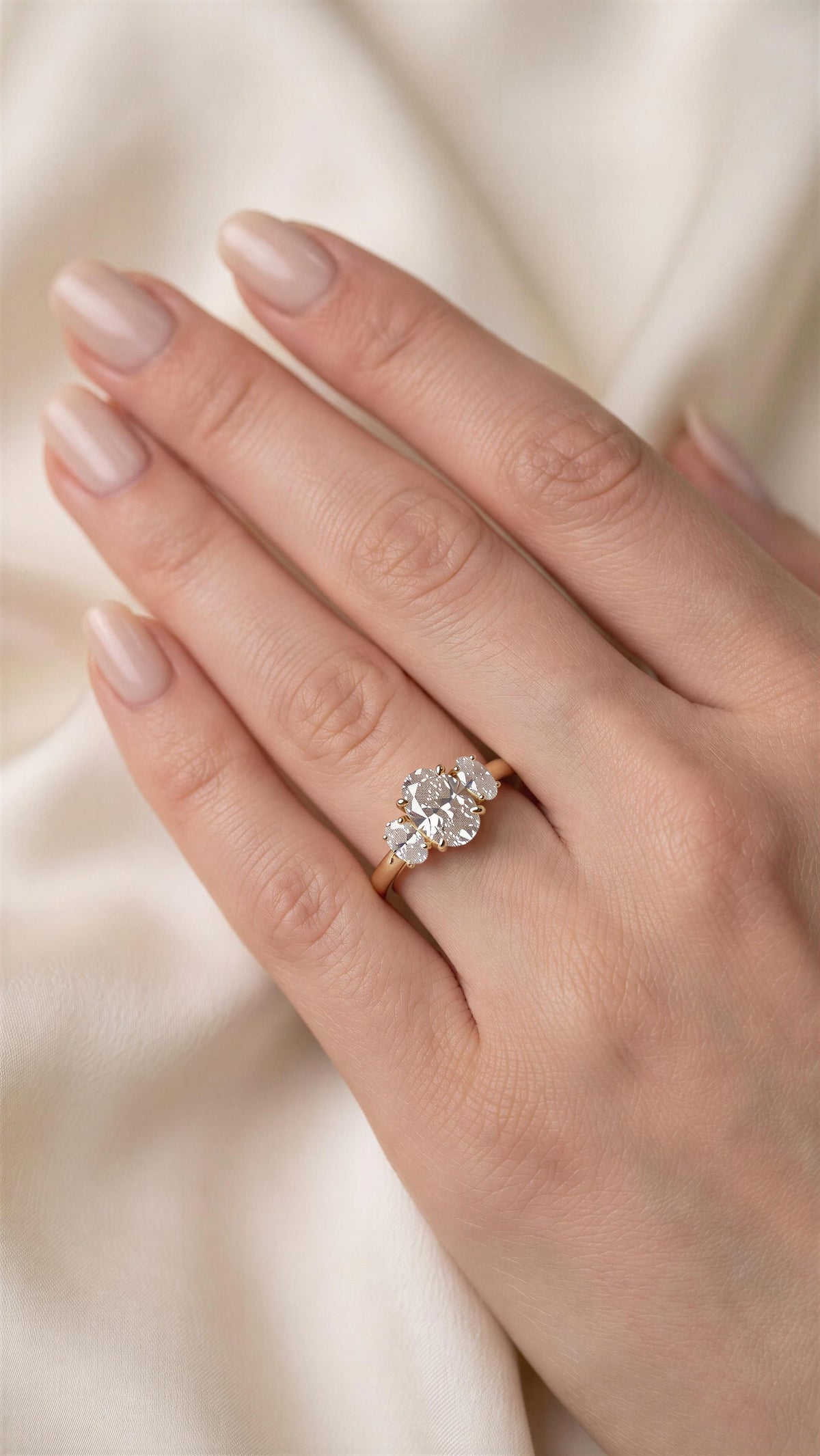
- Oval
- Cushion
- Radiant
- Emerald
- Pear
- Marquise
- Princess
- Asscher
Each shape has its own appearance and personality, so consider your personal style and the type of jewelry you are creating.
5. Find the Diamond That Is Right for You
There is no single "perfect" diamond for everyone. Some customers prioritize a GIA-certified natural diamond, while others prefer the size and value offered by a lab-grown diamond. Others may choose a non-certified or clarity-enhanced diamond to stay within a specific budget.
At US Jewelry Factory®, we offer a variety of diamond options to help you find the right combination of quality, beauty, and value.
Whether you choose a natural or lab-grown diamond, GIA-certified, non-certified, or clarity-enhanced, our goal is to help you select a diamond you will love for years to come.

The top gemologists in the world consider the cut of a diamond to be the most important feature in choosing a diamond. Even a diamond with perfect color and clarity could nevertheless have poor brilliance if it is not well cut. Diamonds can carry cut grades of Ideal, Excellent, Very Good, Good, or Fair.
The way a diamond is cut determines how it reflects light, which is responsible for its sparkle. A well-cut diamond is cut by a skilled professional to the best proportions possible so that light will be reflected from all sides.

If its mirror like facets and disperses through its top. Too shallow a cut will let light escape through a diamond's bottom, causing it to appear dull, while too deep a cut will allow light to be lost through a diamond's sides, making it appear dark.
Under a jeweler's magnifying loupe or microscope diamond imperfections can look like crystals, tiny rivers, or clouds. A diamond's clarity is determined by the presence or absence of inclusions, fewer inclusions mean better clarity, and how visible they are. The greater a diamond's clarity, the greater its brilliance and value. A diamond categorized as internally flawless will have no inclusions, but this is extremely rare.
Diamonds with very, very small inclusions are graded as VVS1 or VVS2. Those with larger inclusions are considered lower-grade. Diamonds with inclusions that are visible with the naked eye are graded I1 to I2.


Colorless diamonds have traditionally been considered the most valuable, though diamonds come in a wide range of colors. Most diamonds are graded on a scale using the letters of the alphabet, from D (colorless), the best grade, through Z (a light yellow). It is difficult for the untrained eye to notice such variations in color unless stones are being compared side by side. They range in hue from the more common yellow (also graded Z+ on the alphabetic scale) to pink, blue, green, red, and even black and white.


Diamonds that are graded D, E, and F tend to be the most expensive because of their rarity. However, any diamond you buy should have a good balance of cut, color, and clarity, so as to impart the most brilliance and dazzle possible.

Carat are the measurement scale used to identify a diamond's, with one carat being equivalent to 100 points. You will often see a diamond referred to as a 3/4-carat stone or a 75-point diamond. Larger stones are often more highly valued, but size should not be the only consideration--high brilliance, which varies according to clarity, cut, and color grade, is highly desirable in a diamond.